

If you have just bought a holiday cottage, or have finished renovating your own outbuildings as holiday lets, it is likely that you will be busy planning how to make your new property cosy and welcoming for guests. But where do you start? You might be thinking paint colour charts and curtain samples, or deliberating over kitchen pots and pans and washing machines. Should you go bright and cheerful or plain and neutral? Will your old TV which you are thinking of replacing at home look good in the lounge? What is the best linen to buy? How do you decorate a holiday cottage that will appeal to everyone?
In short, you will never appeal to everyone. However, getting a few simple things right can make all the difference when you are trying to maximise bookings. This article shares some handy tips on how to decorate and furnish your holiday cottage so it is ready for your first guests.
Fixtures, fittings, fabrics and furnishings
Ultimately the choice of decor will be yours. However, in order to appeal to the type of people who are likely to be staying at your holiday cottage it is important to identify who your target market is before you make any decisions. For example, if your property is going to be pet friendly you will want solid floors and washable throws for the sofas. If you want to attract families with young children then a glass coffee table with sharp edges isn’t a great idea. However, it would be useful to supply some child friendly facilities such as high chairs, cots, plastic cutlery and crockery and a few toys. A romantic cottage for two can be more elegant and luxurious.
Most guests will base their choice of where to stay from photos of the accommodation so it is important to make your property as photogenic as possible. Think about what colours will photograph well. Dark colours can appear drab and lacklustre when photographed. Light, clean, fresh and neutral colours tend to work well and have a wider appeal. You will need to be prepared to freshen up the decor regularly but paying a little bit extra for ‘wipeable’ paint means that you can clean off marks left by suitcases and grubby paws in between redecorating. This is especially useful for holiday cottages that are pet and child friendly.
Fabrics are a great way of bringing in a splash of colour when using neutral shades and a nice way of giving each room individual style. Choose fabrics that will be hard wearing and stand up to regular washing or dry cleaning. Beads, sequins and tassels have a habit of dropping off so are best avoided on throws and scatter cushions. Make sure curtains are not just for dress and fully close with linings that will keep the light out.
Try to add a bit of personality whilst avoiding clutter and ornaments. You could add a few local touches such as work by local artists, pictures of the area or supplying some local ‘treats’ as part of the welcome hamper. A few items from an antique store may also give your property some character. However, guests don’t want to feel like they are staying in somebody else’s house. If you find yourself thinking “hmmm I don’t really like that china dog any more, I think we’ll put it in the cottage” – resist!
See your items of furniture as an investment and don’t just buy the cheapest. Not only is it likely to need replacing sooner, but guests will notice if everything is done on a shoestring. Also try not to buy everything from the same store. You don’t want your guests to feel like they are staying in an IKEA store catalogue. Mix and match your furniture to make it feel more homely.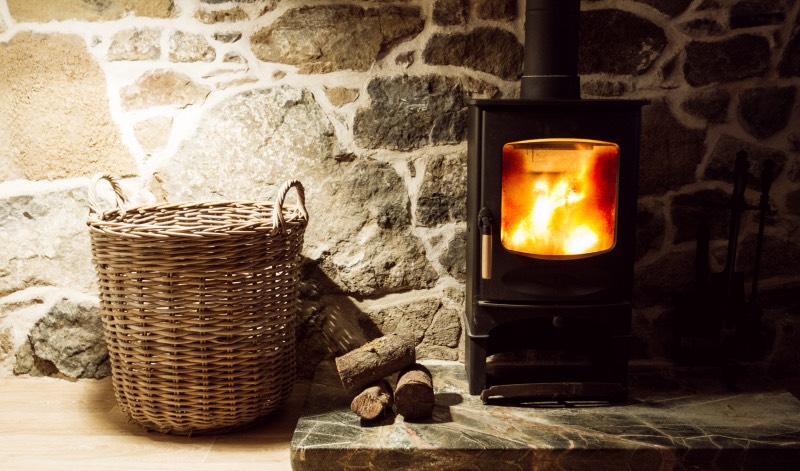
If space allows, a wood burning stove is definitely worth the investment. Not only is it likely to bring in more winter bookings, but it is also likely to stop guests turning the heating up to full during those cosy evenings in. You can find more cost saving tips for your holiday cottage here.
A fully equipped kitchen
Try to resist the urge to kit your holiday cottage out with castoffs from home. We’ve stayed in cottages where we couldn’t find two matching plates! People expect matching crockery and glassware. With supermarket prices so low, there really is no excuse. Providing champagne flutes as well as wine glasses adds an element of luxury. Fizz just doesn’t taste the same out of a wine glass! For such a small cost this simple gesture can go a long way. Buy more than you need for spares and breakages, especially if you are buying end-of-range crockery in the sales.
If you accept dogs, leave out a water bowl. If the owner forgets to pack their dog’s bowl, you don’t really want your new matching John Lewis bowls to be used!
Buy new appliances rather than second hand. You will get a warranty and peace of mind and currently, brand new appliances don’t need to be PAT tested for 12 months. When buying appliances, think “robust” and you won’t go far wrong. The old saying “buy cheap, buy twice” couldn’t be more appropriate for holiday accommodation. If it is cheap and flimsy it will get broken. And the chances are it will be a Saturday night just as you’re sitting down to watch TV when the phone will ring to report any breakages! Buy the most robust electrical goods you can with the fewest number of settings and knobs. Complicated electrical items will only result in confused guests. Make sure you always leave a user manual for electrical items in your property.
By far the best investment that we have made to our cottages is the addition of a dishwasher. Not only will guests appreciate not washing up whilst on holiday, but before the dishwasher we would often have to re-wash up crockery that was left ‘clean’ by the previous guests. Not only has the number of ‘sticky glasses’ reduced, but turn rounds are that little bit easier too.
Washer dryers are handy and will be appreciated by foreign guests who pack lightly to reduce luggage weight. However, based on your likely clientèle, consider whether a drier is really necessary as they do use a lot of energy and guests are unlikely to think twice about your electricity bill.
People expect a holiday cottage to be equipped as well as their own home so take a look around your own kitchen. Make sure you cater for everything from plenty of crockery and glasses to a good range of pots and pans, a selection of utensils such as a potato peeler, pizza cutter and corkscrew, as well as the odd creature comfort such as a coffee machine.
Comfortable living rooms
Old furniture can be uncomfortable and runs the risk of not being fire retardant, so new is best. A few other fire safety tips for holiday cottages can be found here. We tend to choose darker ‘red wine’ coloured settees for obvious reasons. Consider washable removal covers for sofas and armchairs plus an extra set for the odd emergency. Some manufacturers allow additional arm caps to be purchased for a modest fee, which is well worth it in our view.
Small occasional tables near the sofa will help prevent people leaving glasses of red wine on the carpet. A stock of coasters will also help prevent rings and glass stains. Not everyone will use them, but some will.
Many guests will expect modern televisions, DVD players and possibly satellite channels and an audio system with Bluetooth. If you provide DVDs you can find out about music and film licences here. Internet access has become a necessity rather than a nice-to-have. It will secure you extra bookings and pay for itself very quickly. Here are a few additional tips on getting repeat bookings for your holiday cottage.

Bedrooms that guarantee a good night’s sleep
If you have enough room, guests tend to prefer king size beds. Zip and link beds are useful too as you will broaden your market by attracting families and couples by changing bedroom configuration from doubles to twins. Whatever beds you end up buying, remember that good beds make happy guests. Comfortable mattresses and good pillows can go a long way to ensuring your guests have a relaxing and restful holiday.
Shop about for the best prices when it comes to bed linen and ideally buy pure cotton. Crisp neutral colours such as white or cream look good. If your bed linen is all the same colour you don’t need to replace a whole set if just one pillow case needs to be thrown out. They can also all be washed together which saves time and money on each changeover. White is actually a surprisingly practical colour as you can bleach items that get stained.
You should ideally have three sets of linen so whilst one is in use, one is being laundered and the other is ready for the next changeover. This also means you have a few spares on hand if something needs replacing last minute. A washable throw on the bed can dress a room nicely and add a splash of colour if you have gone for neutral linen.
Good quality linen can be obtained at reasonable prices in the sales from shops such as John Lewis, The White Company and Laura Ashley, or TK Max often has good quality linen at reduced prices. Pillow and mattress protectors are a must, but try to avoid the ‘sweaty’ waterproof style as they can be quite uncomfortable for guests. During the winter you might want to provide extra blankets that guests can help themselves to.
Ensure guests have adequate storage room and make sure you have quality curtains that block out the light. If you have Velux windows in bedroom areas, ensure they are fitted with black-out blinds. Other useful items are an alarm clock, hairdryers, mirrors and plenty of coat hangers.
Don’t forget the bathroom
Many owners provide towels and bath mats for guests. You will need at least one hand towel and one bath towel per guest. Guests will expect to find a pedal bin, with a liner, in the bathroom, along with a soap dish, beaker and toilet brush – ideally an enclosed one with changeable heads so you can keep it fresh and clean. We have found that guests really appreciate being left a toilet roll or two. Nice extra touches also include liquid soap and hand cream dispensers at the sink, cotton wool in a jar and bubble bath for a relaxing soak. It is advisable to leave cleaning products for guests use and shower curtains can get grubby so buy the cleanable kind and keep a spare to change when required.
The garden and outside living area
Grass can be difficult to maintain. In the summer it needs cutting every week. Obviously, you need to work around your personal situation, but a paved, gravelled or decked patio is a maintenance-free alternative to grass.
If you can afford expensive wooden furniture then all the better. However, the cheaper so-called ‘hardwood’ furniture sold by DIY stores tends to rot very quickly if left out all year. Places like Argos sell reasonably priced aluminium style garden furniture with either a modern or classic look. We have found these to be rot, rust and hassle-free.
Also consider a sun umbrella, BBQ and possibly sun loungers for guests to relax on a sunny day. You’ll probably end up replacing the BBQ every year or two regardless of how much you spend. You will need to make sure it is cleaned each changeover. Here are a few extra cleaning tips to make sure your holiday cottages are ready for guests.
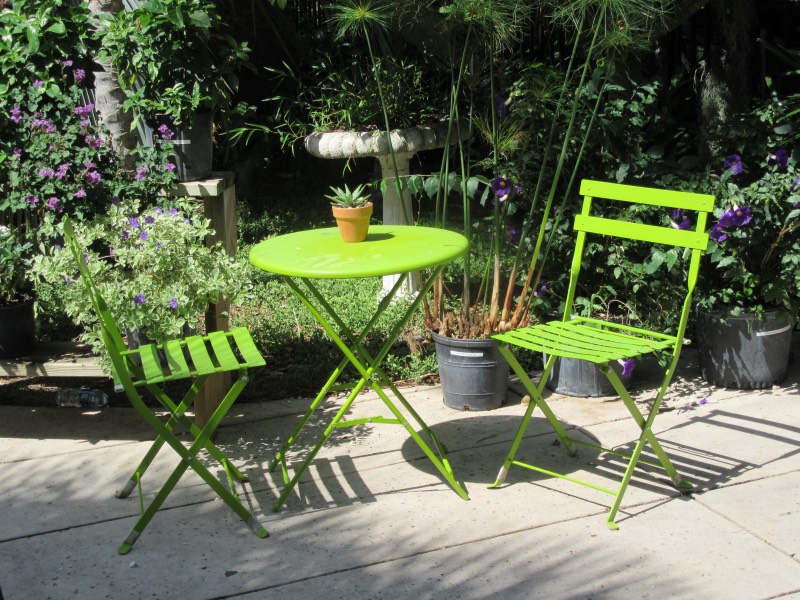
Plant tubs brighten up a garden or patio area, but remember they need regular watering during the summer and guests generally forget to do this. Just putting a small potted flowering plant on the garden table can brighten up the patio area during the winter months when everything can look rather drab. A few pots of herbs that guests can help themselves to is also a nice touch.
All ready to go?
Last but not least, when your holiday cottage is all ready to go, stay a night or two there yourselves. This will iron out any teething problems and there might be some things that you will only notice after you have slept there. Whilst most guests will provide invaluable feedback, it is obviously better if you can solve any issues before they arrive. It is a good idea to provide a visitors book so people can leave their comments and recommendations of places to visit for future guests. You will hopefully collect lots of positive reviews that you can use in future advertising. It is also worth leaving a spiral bound suggestions book where guests can leave valuable feedback that can be easily removed and not left available for all to read. Take a look at our guide on how to handle reviews of your holiday cottage.
These are just a few of the things we have learnt along the way whilst setting up our own holiday cottages. If you have some good tips, please leave a reply below and share them with other cottage owners. Alternatively, take a look at our Q&A for setting up a holiday home.
You may want to edit the part where you talk about your John Lewis bowels.
Thanks Barbara – Don’t know how we missed that!
…and although you corrected John Lewis’ bowels – the dogs bowels didn’t get a look in! 😉
Good article though 🙂
That’s hilarious! Thanks again for pointing it out. I can confirm that I now know my bowls from my bowels!
Yes, a BBQ is nice but we found that guests did not use it properly to minimise grease buildup, they didn’t clean it at all and didn’t even turn off the gas cylinder after using the BBQ. We spent an hour trying to clean it after the first week and weren’t finished when the next guests arrived! Same thing happened the second week. So we took the BBQ away.
You say that the BBQ will need replacing every 1-2 years. Also maintaining all-matching dishes, etc. means having to dispose of almost-complete sets when you can’t replace pieces. Is there any thought here for the waste produced and stuff that ends up in landfills as a result of letting people be completely careless?
It’s all very nice to provide everything guests want but remember that many will not care about the condition they leave your property in. Staying in a holiday cottage costs significantly less than a hotel, and you get an entire house to yourselves, yet people generally think you’re making plenty of money and have an army of cleaners for changeovers. It’s easy to make your cottage so full of amenities that the cost of keeping it all up means you make no money and can barely set everything right again during the changeover.
Thanks for sharing Cindy.
Re the BBQ, we try to use the ones with grills that can go in the dishwasher which makes cleaning them a little easier on each turnaround but appreciate this can be tricky if you need to provide a large BBQ!
Crockery can generate wastage when you cannot buy a matching replacement. We tend to avoid crockery ‘sets’ as they are often discontinued so stick to plain white crockery with items that can be purchased individually (smaller local suppliers can be good for this, even if a little more expensive) or a long-standing brand that is easy to replace (and keep a stock of spares in the cupboard just in case they are discontinued!).
Appreciate your comments and thanks for sharing them with other cottage owners.
Different patterned and coloured plates and bowls look very pretty. It works much better for our cottage than the all white look. I also use lots of coloured glasses too. I can replace all breakages with minimum spend in the local charity shops.
Re. Bedrooms. Don’t make the mistake we made by buying beds with slats. They look very stylish but with our increasingly obese population, including holidaymakers, the slats can and do break under the weight of ‘sleeping’ guests.
This happened to us with guests in our holiday cottage, which meant we had to very quickly hire a van and move beds from our house to the holiday let to accommodate our guests. Very stressful.
Buy divan beds instead.
Thanks for sharing your experience Keith.
Good morning, we’ve just acquired our first holiday cottage and have found the tips here helpful. Can anyone please guide us on best bed choices, what worked and what to avoid ? Any recommendations on companies you’ve purchased from would be helpful.
As newbies, would you go with a cottage company for the first year until I get a website up and running ?
Thanks in advance, Joy
Hi Joy, hopefully some of our owners can give you some feedback. For our own holiday cottages, I have always used a local company and one that has guided me on suitable mattresses that are suitable/compliant for holiday accommodation / hotel use. It is certainly worth considering whether you want to go down the ‘zip and link’ route which gives the flexibility of providing twin or a large double bed but it is worth considering space and also the additional bed linen and changing around of different bed configurations on a potentially limited changeover timeframe.
Good luck in your new venture.
Hi All,
I have recently joined the Holiday cottage market. Is there any recommendations on a good BBq that is easy to clean. I know the guest won’t treat it right so nothing too expensive pls.
Thanks,
Ajay
We only provide a basic charcoal BBQ, there’s not much to clean (wire brush on grid) and no one complains! Homebase or similar.
great article…….
We just bought our first holiday let, so much to think away. Where do you guys get your bed linen from and what quality do you get. Thanks in advance
Angela x
Hi Angela, hopefully some of our owners will let you know where they buy theirs. I tend to stock up in the sales at places like The White Company. I like to have quality linen but am conscious that it can get damaged/stained (biro ink etc). When buying linen, you may want to consider washing and the mixing of colours. Having bright coloured items (like towels/tea towels) and white bed linen can mean doing more washes!
Good luck with your new venture.
Thanks for sharing such informative content with us. I will keep looking for more content like this in future.